
Transportation &
Autonomy
Laboratory for Intelligence

We advance intelligence in transportation systems, specializing in operations analysis and applied artificial intelligence to solve core challenges in autonomy, complex agent behaviors, and real-world integration.

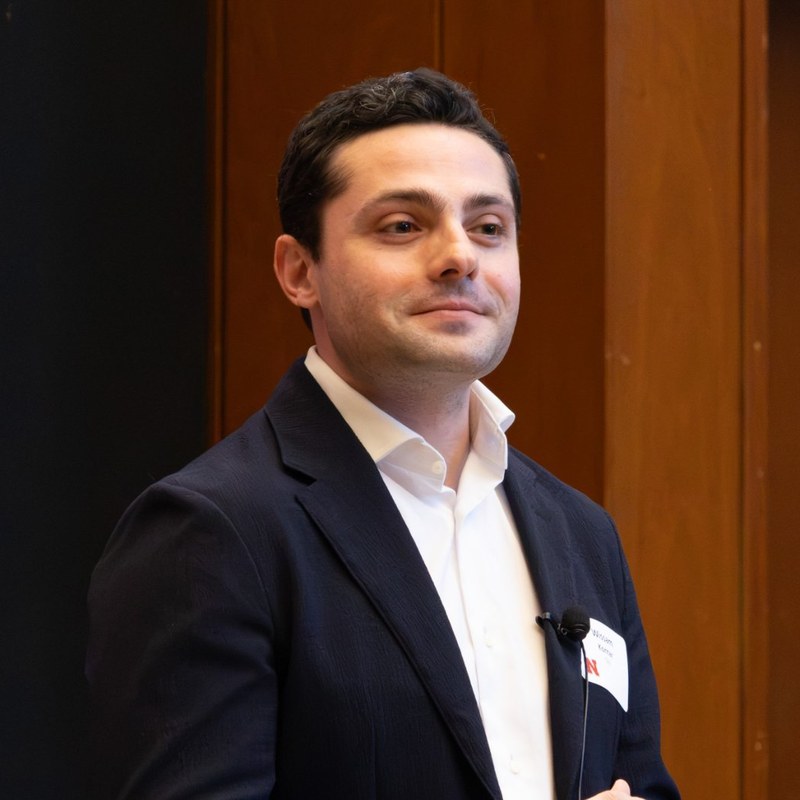
Wissam Kontar Led by Wissam Kontar Assistant Professor · Principal Investigator
TALI Lab Logo
Research Focus

What We Work On

We study how intelligent agents behave, learn, and interact, and what that means for the complex systems they form. Our work is organized into four themes.

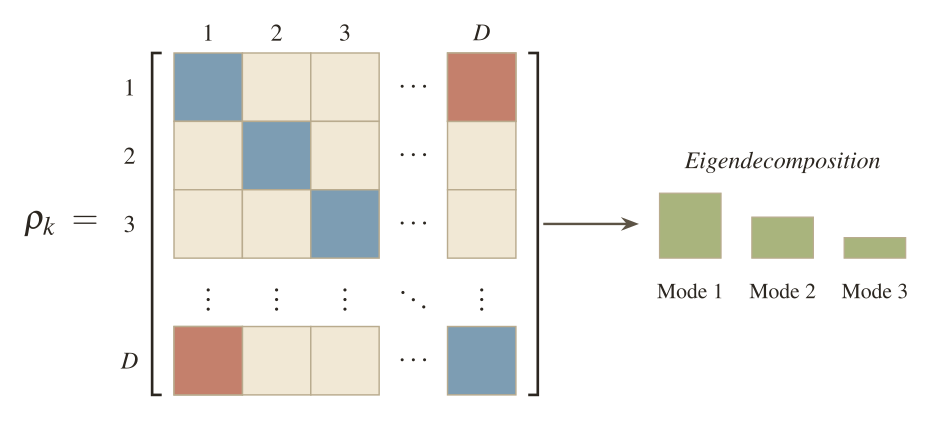
The density matrix that represents an agent's state
Theme 1

Quantum Methods

What if we modeled the agents in a system the way quantum theory models particles?

We redefine how the agents in a system are represented and modeled, from a quantum perspective. Two concepts guide the work: superposition, where an agent holds several possible behaviors at once until its context resolves them, and entanglement, where the behaviors of interacting agents are tied together and cannot be described one at a time.

SuperpositionEntanglementAgent representation
What we have learned
  • An agent is never just one type. Its behavior is a blend of possibilities that shifts with the situation.
  • Agents cannot be understood one at a time. What each one does is tied to the others around it.
  • Describing agents this way explains patterns that only appear in the system as a whole.
Theme 2

Super Intelligence

How do intelligent agents learn to act well, together, in the real world?

An intelligent agent has to be safe, work well with those around it, and keep the whole system moving, and these goals often pull against each other. We build learning methods that find the balance from real-world data, let large groups of agents share what they learn while each stays individual, and remain reliable under uncertainty and attack.

Consensus and trade-offsKnowledge sharing and personalizationPhysics-guided learningDecisions under uncertainty
What we have learned
  • No agent can have it all. Being safe, cooperative and efficient at the same moment is rare.
  • The right balance does not need to be set by hand. It can be learned from how the real world behaves.
  • Agents learn more together than alone, and they can share what they learn while staying individual.
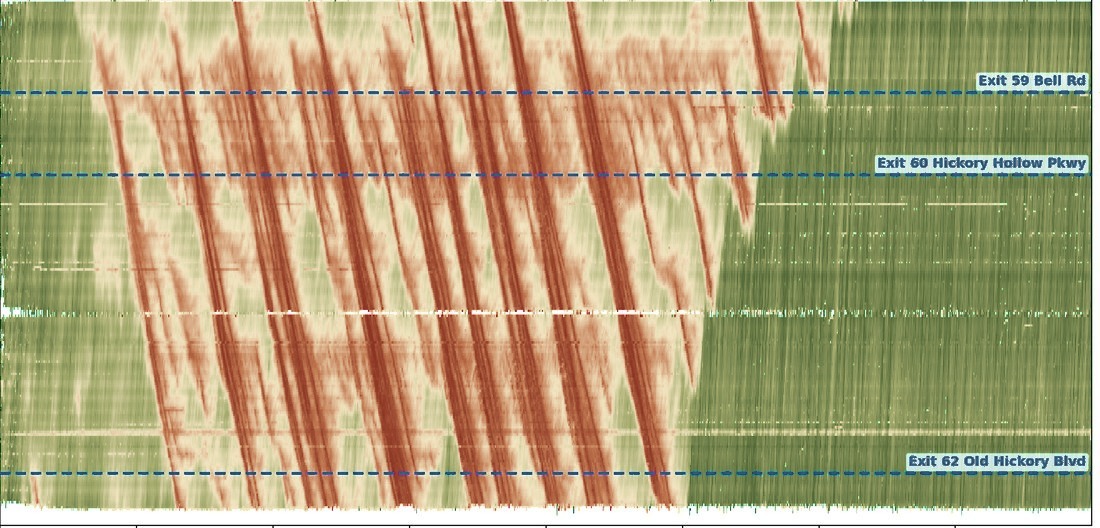
Speed along I-24 over one morning, with congestion waves travelling backward through traffic
Theme 3

Traffic Flow Theory

What happens to a whole system when every agent in it behaves differently?

Waves, stop-and-go oscillations and hysteresis in traffic emerge from how individual agents respond to one another. We develop theory and measurement methods that connect individual behavior, human or automated, to these system-level phenomena.

Behavioral heterogeneityOscillations and hysteresisMixed-autonomy dynamics
What we have learned
  • Small differences between individuals add up to large effects on the whole system.
  • Every individual is part common behavior and part personal habit, and the two can be told apart.
  • Congestion has memory. The way out of a traffic jam does not look like the way in.
Theme 4

Mobility Systems

How do people move through cities, and what do new technologies mean for society and the environment?

Beyond the roadway, we study how movement patterns shift during crises and as new mobility technologies are adopted, and what those shifts mean for emissions and urban resilience.

Mobility under crisisAdoption of emerging modesTransportation emissions
What we have learned
  • In a crisis, people stay closer to home and are slow to return to their old routines.
  • A smarter technology does not guarantee a cleaner outcome. Convenience can lead people to travel more.
  • People make greener choices when the environmental cost is put in front of them.
Recent Work

Selected Publications

Full Publication List

A selection of our work from the last three years. See the full publication list → or Google Scholar →

2026
Quantum-Inspired Modeling of Driving Behavior
Elayan, M., Armantalab, O., Kontar, W.
arXiv preprint
Quantum Methods
2026
Learning the Pareto space of multi-objective autonomous driving: A modular, data-driven approach
Elayan, M., Kontar, W.
IEEE Intelligent Vehicles Symposium (IV 2026)
Super Intelligence
2026
Can automated vehicles have it all? A consensus framework for diagnosing behavioral trade-offs in mixed traffic
Elayan, M., Kontar, W.
Transportation Research Part C: Emerging Technologies
Super Intelligence
2026
Behavioral Heterogeneity as Quantum-Inspired Representation
Elayan, M., Kontar, W.
arXiv preprint  ·  🏆 Best Paper Award shortlist, IEEE ITSC 2026 · 2nd place, BTR 2026
Quantum Methods
2026
A Quantum-Inspired Representation of Dynamic Travel Behavior
Armantalab, O., Elayan, M., Zhao, L., Huynh, N.N., Kontar, W.
SSRN preprint
Quantum MethodsMobility Systems
2026
Detecting falsified lane-changing behavior in connected automated vehicles using physics-guided neural networks
Kim, Y., Zhong, X., Shi, L., Kontar, W., Chen, S., Ahn, S.
Transportation Research Part C: Emerging Technologies
Super Intelligence
2026
Optimal measurement of traffic hysteresis under traffic oscillations: A binary integer programming approach
Pu, F., Zhou, Y., Ahn, S., Li, S., Kontar, W., Wang, X.
Transportation Research Part B: Methodological  ·  🏆 Nathan Gartner Award, TRB 2025
Traffic Flow Theory
2026
Capturing behavioral heterogeneity for traffic flow: A scalable and personalized decomposition approach
Kontar, W., Kim, Y., Zhong, X., Ahn, S.
Transportation Research Part B: Methodological - ISTTT26 Special Issue
Super IntelligenceTraffic Flow Theory
2026
One mile forward, six miles back: A rebound effect in autonomous vehicle adoption
Kontar, W., Armantalab, O., Ahn, S., Hicks, A.
Resources, Conservation and Recycling
Mobility Systems
2025
Consensus-aware AV behavior: Trade-offs between safety, interaction, and performance in mixed urban traffic
Elayan, M., Kontar, W.
IEEE International Conference on Intelligent Transportation Systems (ITSC 2025)
Super Intelligence
2025
Mobility behavior evolution during extended emergencies: returners, explorers, and the 15-minute city
Armantalab, O., Hawkins, J., Kontar, W.
arXiv preprint
Mobility Systems
2024
Human-automated vehicle interactions: Voluntary driver intervention in car-following
Zhong, X., Zhou, Y., Kamaraj, A.V., Zhou, Z., Kontar, W., Negrut, D., Lee, J.D., Ahn, S.
Transportation Research Part C: Emerging Technologies
Super Intelligence
2024
Learning Driver Models for Automated Vehicles via Knowledge Sharing and Personalization
Kontar, W., Zhong, X., Ahn, S.
Transportation Research Record  ·  🏆 D. Grant Mickle Award, TRB 2025
Super Intelligence
2024
A Strategic Approach to Handle Uncertainties in Autonomous Vehicle's Car-following Behavior
Kontar, W., Ahn, S.
Transportation Research Part C: Emerging Technologies
Super Intelligence
What Is Happening

Upcoming & Latest

All News

Where we will be presenting next, and the latest funding, awards and news from the lab.

Jul
2026
Upcoming Conference
Capturing Behavioral Heterogeneity for Traffic Flow: A Scalable and Personalized Decomposition Approach
International Symposium on Transportation and Traffic Theory (ISTTT26) - Lectern
Munich, Germany
Jun
2026
Upcoming Conference
Learning the Pareto Space of Multi-Objective Autonomous Driving: A Modular, Data-Driven Approach
IEEE IV
Detroit, MI, USA
Mar
2026
Upcoming Invited Talk
Consensus-Seeking Autonomous Agents in Complex Transportation Systems
NSF NAIRR Meeting
Washington, D.C., USA
Mar
2026
Upcoming Invited Talk
Heterogeneous Agents, Competing Goals: Two Defining Features of Interactive Traffic Systems
University of South Florida
Tampa, FL, USA
Jan
2026
Upcoming Conference
Multi-agent Consensus | Mobility under Crisis | Aerial and Ground Autonomous Mobility in Agriculture
Transportation Research Board Annual Meeting (TRB 2026)
Washington, D.C., USA
Oct
2025
Upcoming Conference
Anomaly Detection in Autonomous Driving Systems
ICCV
Honolulu, HI, USA
2026
Award
Second place at Bridging Transportation Research (BTR) 2026
"Behavioral Heterogeneity as Quantum-Inspired Representation" came second at BTR 2026.
2026
Award
Shortlisted for the Best Paper Award at IEEE ITSC 2026
"Behavioral Heterogeneity as Quantum-Inspired Representation" was shortlisted for the Best Paper Award.
Dec
2025
Funding
New award from U.S. DOT Mid-America Transportation Center (MATC)
Safety and Mobility Risk Index for Region VII Transportation Networks
About the project →
Sep
2025
Funding
New award from NSF National Artificial Intelligence Research Resource (NAIRR)
Consensus-Seeking Autonomous Agents in Complex Cyber-Physical Transportation Systems
About the project →
Jan
2025
New Position
Joined University of Nebraska-Lincoln as Assistant Professor
Wissam Kontar joined the Department of Civil and Environmental Engineering and started the TALI lab.
Jan
2025
Award
Nathan Gartner Award, TRB ACP50 committee, 2025
"Optimal Measurement of Traffic Hysteresis under Traffic Oscillations" recognized by the ACP50 committee.

We Are Hiring for Fall 2027

PhD and Master's positions are open. Email your application to wkontar2@unl.edu.